Yachting has its own vocabulary. Apparently, “left” and “right” weren’t going to cut it, so we have port and starboard instead.
After five years working as a yacht stewardess in Greece, I know that yacht language can feel like its own little world. On the boats I worked on, the crew communicated mainly in Greek, so I won’t pretend every English term below was part of my daily working vocabulary. The working language varies from boat to boat, but yachting is international, and knowing the basics can help you follow conversations, understand the layout and ask better questions.
This isn’t an exam revision sheet. It’s a practical guide to 75 yacht terms you’re likely to come across as you learn about the industry. Some apply to motor yachts and sailing yachts; others are specific to sailing or to certain yacht layouts.
Directions and positions
Port and starboard are fixed directions on a yacht. Imagine you’re facing the bow: port is on your left and starboard is on your right. Once you’ve got those two, the rest becomes much easier.
Abeam: At a right angle to the yacht’s centreline, roughly alongside it. If a buoy is directly beside the yacht, it’s abeam.
Aft: Towards the rear of the yacht, or in the area near the stern.
Amidships: In or near the middle of the yacht, between the bow and stern.
Astern: Behind the yacht, or moving backwards. “The tender is astern” means it’s behind the yacht.
Bow: The front end of the yacht.
Port: The left-hand side of the yacht when you’re facing the bow.
Port bow: The forward left-hand area of the yacht.
Port quarter: The rear left-hand area, between the side and the stern.
Starboard: The right-hand side when you’re facing the bow.
Starboard bow: The forward right-hand area.
Starboard quarter: The rear right-hand area, between the side and the stern.
Stern: The back end of the yacht.
Parts and spaces on a yacht
Not every yacht has the same layout. A motor yacht might have a flybridge, for example, while a sailing yacht has a very different arrangement. Still, these are useful places and parts to recognise.
Beam: The yacht’s width at its widest point.
Bimini: A canvas canopy that provides shade over an open area, often the cockpit.
Bridge: The area where the captain and officers navigate and control the yacht. On some boats, you’ll also hear wheelhouse.
Cockpit: An open area on deck. On many sailing yachts, it’s where the helm and seating are; on other yachts, the layout may be different.
Companionway: Steps or a passage connecting one deck or level to another, often leading below deck.
Deck: A floor-like surface forming part of the yacht’s structure. A yacht can have several decks, each with its own name.
Draft: How far the yacht extends below the waterline. It matters when navigating shallow water.
Flybridge: An upper, usually open deck on a motor yacht, often with another helm station and guest seating.
Foredeck: The part of the deck towards the bow.
Galley: The kitchen. It might be tucked below deck or open to another area, depending on the yacht.
Gangway: A passage or access point used to board or leave a vessel. On a yacht, the word can also refer to the route people use to get on board.
Hatch: An opening in a deck, floor or bulkhead that provides access to another space.
Head: A yacht’s toilet or toilet compartment. It doesn’t always mean the whole bathroom.
Helm: The steering position or controls. A yacht can have more than one helm station.
Hull: The main body of the yacht, excluding the parts built above it.
Keel: A structural part running along the bottom of the hull. On many sailing yachts, it also helps the boat resist being pushed sideways by the wind.
Lazarette: A storage compartment near the stern, often used for equipment. The exact space and what’s kept in it vary by yacht.
Rudder: An underwater steering surface, usually near the stern, that helps change the yacht’s direction.
Tender: A smaller boat carried or used by a larger yacht. It can take people ashore or be used for water activities.
Bulkhead: An internal wall or partition within a vessel.
Movement, wind and sailing
These terms turn up in navigation and conversation about how a yacht is moving. Some are specific to sailing, but they’re useful to recognise even if you’re joining a motor yacht.
Apparent wind: The wind experienced aboard a moving yacht. The yacht’s own movement affects how the wind feels and the direction it seems to come from.
Heading: The direction the bow is pointing. It may differ from the direction the yacht is actually travelling over the seabed.
Heel: A yacht’s lean to one side. Sailing yachts heel under sail; motor yachts can also heel, for example when turning.
Knot: A unit of speed equal to one nautical mile per hour. If a yacht is doing 10 knots, it’s travelling at 10 nautical miles per hour.
Leeward: The side sheltered from the wind. It’s pronounced “loo-ward.”
Mainsail: The principal sail on many sailing yachts, attached to the mainmast.
Nautical mile: A unit of distance used at sea, equal to 1,852 metres.
Reach: A point of sail where the wind comes across the side of the yacht rather than directly from ahead or behind. There are different kinds of reach, depending on the wind angle.
Tack: To change direction by turning the bow through the wind. This term also describes which side the wind is coming over while sailing.
Gybe: To change direction while sailing with the wind behind the yacht, so the stern passes through the wind and the sail swings across. The boom can move quickly, so this is a manoeuvre that requires care.
Trim: To adjust the sails to suit the wind. The word can also describe how a vessel sits in the water, so context matters.
True wind: The actual wind, measured independently of the yacht’s movement. It’s different from the apparent wind experienced on board.
Underway: In maritime rules, a vessel is underway when it isn’t anchored, made fast to shore or aground. It can still be underway even if it’s temporarily making no progress through the water. www.navcen.uscg.gov
Windward: The side facing the wind.
Boom: A spar attached to the mast that supports the lower edge of a sail, usually the mainsail. On a sailing yacht, it can swing from side to side as the yacht changes course.
Anchoring and mooring
Anchoring and mooring both keep a yacht in place, but they don’t mean exactly the same thing. An anchor is lowered to hold the yacht on the seabed; a mooring usually refers to a fixed arrangement used to secure a vessel.
Anchor: Heavy equipment lowered to the seabed to help hold a yacht in position.
Anchor chain: The chain connecting the anchor to the yacht. Some yachts use chain throughout; others have a combination of chain and rope.
Anchor aweigh: An anchor is aweigh when it has been lifted clear of the seabed. It doesn’t necessarily mean it’s already secured in its final position.
Berth: A word with two common meanings: a yacht’s allocated space in a marina, or a bed on board.
Bow line: A line led from the bow to a dock or another point to help secure the yacht. It isn’t the same as a bowline, which is a type of knot.
Breast line: A mooring line led roughly at right angles to the dock to help keep the yacht alongside.
Cast off: To release a line or let go of a mooring.
Cleat: A fitting on a yacht or dock around which a line can be secured.
Fender: A cushion placed between a yacht and a dock or another vessel to help prevent damage.
Line: The usual nautical word for a rope with a specific job on board. In other words, the rope becomes a line once it has a purpose.
Make fast: To secure a line or fasten something firmly.
Passerelle: A movable ramp or gangplank used to board or leave a yacht. It’s especially handy when the yacht is moored stern-to.
Scope: The amount of anchor chain or line paid out compared with the depth of the water. The appropriate amount depends on conditions and the yacht’s anchoring setup.
Spring line: A mooring line led diagonally to help stop a yacht moving forwards or backwards along the dock.
Stern line: A line led from the stern to a dock, quay or mooring point. In a Mediterranean stern-to berth, stern lines help hold the back of the yacht in position.
Interior and everyday crew language
Yacht layouts and department language vary, so you may hear different names for similar spaces. These are useful terms to recognise, especially if you’re curious about interior work and guest service.
Crew cabin: A cabin used by crew. The size, layout and number of people sharing it depend on the yacht.
Crew mess: The area where crew eat and spend breaks. It’s usually separate from guest spaces.
Guest cabin: A cabin for guests. You may also hear stateroom, especially on larger yachts.
Mise en place: A French phrase meaning “everything in its place.” In food service, it refers to getting the ingredients, equipment and setup ready before service begins.
Salon: The main indoor lounge or living area for guests. You may also see it written as saloon.
Service pantry: A smaller working area used to prepare or stage items for service. Not every yacht has one, and the layout can vary considerably.
Stow: To put equipment or belongings away properly. On board, knowing where things belong is half the battle.
Safety and communication
Safety terms are worth learning early. Their exact use depends on the situation, and a yacht’s crew should always explain its own procedures during familiarisation.
AIS (Automatic Identification System): An electronic system that can share a vessel’s identity, position, course and speed with other equipped vessels and shore stations. Whether a vessel must carry AIS depends on the applicable rules; it isn’t accurate to say that every yacht over a single tonnage threshold must have it. www.imo.org
Man overboard: A person has fallen into the water. You may hear the phrase used as an alert or see it shortened to MOB.
Mayday: An internationally recognised distress call for a vessel or person facing grave and imminent danger and needing immediate assistance.
Pan-Pan: An urgency call for an important situation that needs attention but does not involve the grave and imminent danger associated with a Mayday.
Muster station: A designated place where people report during an emergency.
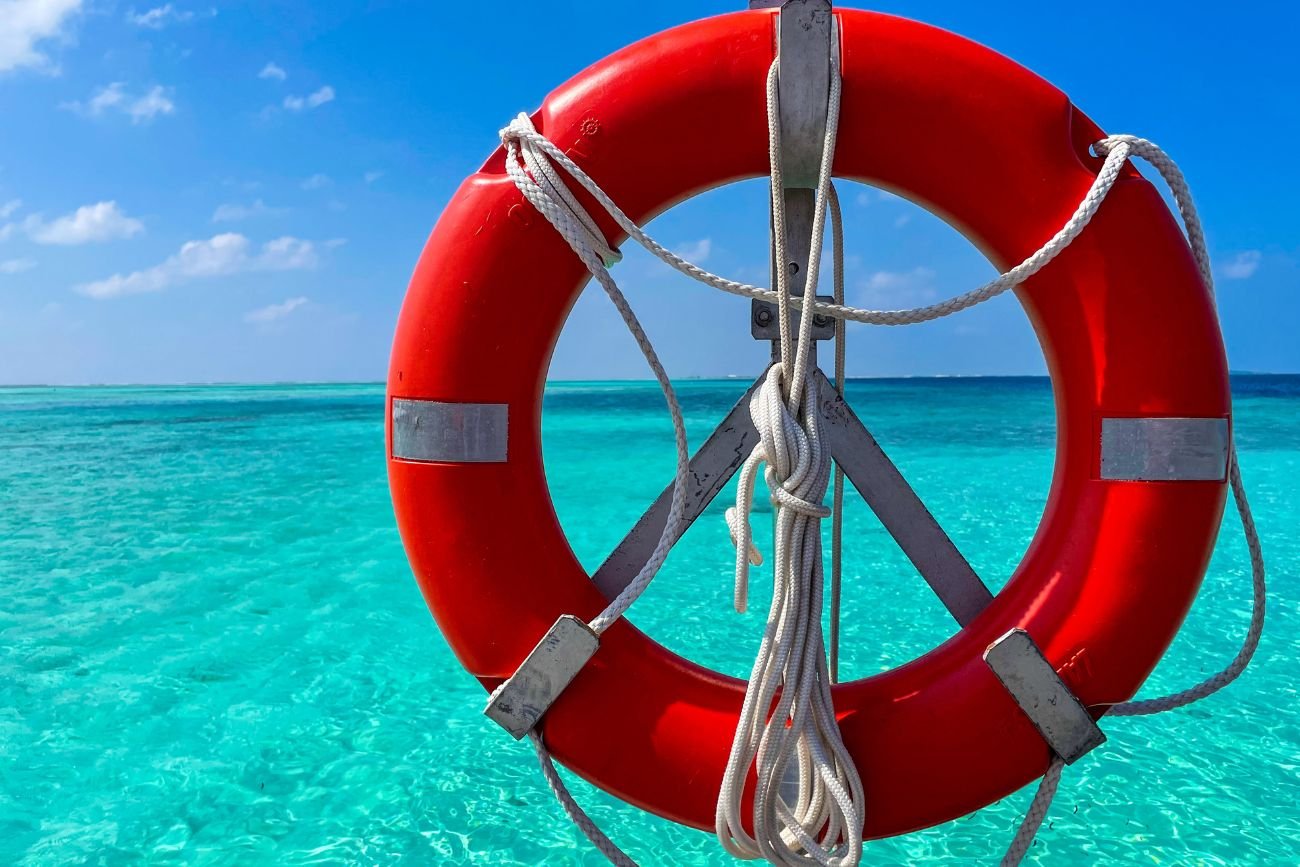
Lifejacket / PFD: A wearable device designed to help keep a person afloat. PFD means personal flotation device. Follow the yacht’s briefing on where the equipment is kept and how it should be worn.
A few final words before you join the crew
You don’t need to learn all 75 terms in one sitting. Start with the directions, the main parts of a yacht and the words connected to safety. The rest will make more sense as you encounter it in context.
And if someone uses a term you don’t know, ask. Learning the vocabulary is part of learning the job; pretending you understood can make a simple moment unnecessarily awkward.